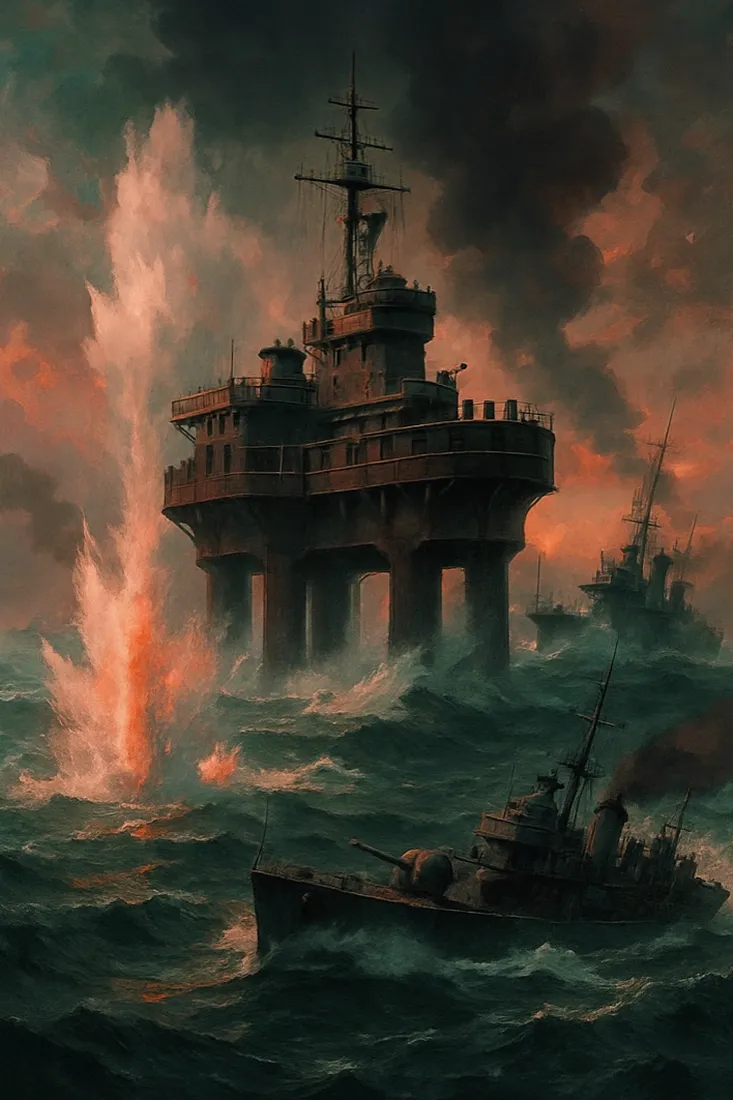
Seafight wastes no time. Within minutes of signing up you are steering a small vessel across a sea chart, clicking on monsters and trading fire. There is no city to build, no farm to feed. The ship is everything: in Bigpoint’s own words it is your sanctuary and your fortress, and every upgrade you buy goes straight into hull, sails and guns.
That directness is the appeal and the limit. Where Grepolis and Ikariam reward patience across weeks, Seafight rewards an evening with the volume turned up. It is a game about hunting, looting and returning to port with something heavier than you left with, and it sits comfortably at number two on our shelf for anyone who finds strategy games a touch too slow.
Learning the wheel in real time
Movement and combat happen live in the browser. You click to sail, select targets and keep an eye on your hull while the enemy does the same. The early waters are full of monsters that teach you the rhythm of closing distance, firing and pulling away to repair, and the learning curve is short enough that our least patient tester was enjoying herself on the first night.
What takes longer is understanding the economy behind the fights. Ammunition, repairs and upgrades all cost something, and the game slowly teaches you to choose fights you can afford. That is where the light strategy lives: not in grand plans but in knowing when to turn for home with a full hold.
Monsters, rival captains and a busy horizon
Seafight mixes player-versus-environment hunting with player-versus-player battles. Sea creatures provide steady progress and loot, while other captains provide the spikes of adrenaline. We found the monster hunting satisfying in a methodical way, particularly once we had enough firepower to clear a stretch of water without limping back to repair every few minutes.
The waters are not all alike either. Different sea charts carry different moods, from cold northern waters to warmer, more tropical ones, and moving into tougher regions is a natural way to feel your ship growing. The danger rises with the scenery, and the first time a bigger rival ambushes you is a lesson you only need once.
Treasure, upgrades and the long tail
Treasure and gold are the point of almost every voyage. What you bring home buys better equipment and ship improvements, and the sense of progress is very concrete: a ship that once struggled against a mid-sized monster eventually shrugs it off. There are a great many ship designs and items to chase, which gives long-term players something to aim at.
This is also where the free-to-play model bites. Bigpoint sells premium items and speed-ups, and in the upper reaches of the game you can feel the gap between captains who pay and those who grind. A free player can absolutely enjoy months of Seafight, but the climb gets steeper, and our fairness score reflects that honestly.
Why a guild changes the voyage
Sailing alone works for a while, but guilds turn Seafight into a different game. Fellow pirates help with tougher hunts, provide cover in contested waters and keep chat lively. Our guild was small and chaotic, with members from all over Europe and one regular who only ever logged on during his lunch break in Leeds, and that made the evenings much warmer.
If you join one, pick a guild whose hours overlap with yours. A guild that sails while you sleep is no help when a rival turns up on your bow. It is also worth asking veterans which waters are worth your time at your level, because the game is not always generous with that advice.
Seafight: the first week afloat
- Play through the starter quests near port; they teach steering, targeting and repairing without much danger.
- Hunt smaller sea monsters until combat feels automatic, and return to repair before the hull gets low.
- Spend early treasure on core ship improvements rather than cosmetic extras, so fights become cheaper to win.
- Read the chat for a few evenings and find a guild that sails at your usual hours.
- Move into tougher waters gradually, and only once your ship handles the current monsters comfortably.
What we love
- Action within minutes of signing up, with no city or farm to manage first.
- Real-time naval combat that genuinely feels like sailing and steering.
- A clear, concrete sense of your ship growing stronger week by week.
- Guild life adds company and protection in busier waters.
What grates
- Upper levels lean hard on premium items, widening the gap for free captains.
- Light on strategic depth compared with the island builders on our shelf.
- Being ambushed by a much stronger player can sour a short evening.
Who Seafight suits best
Seafight is for players who want their pirate fantasy delivered straight, with cannon fire in the first five minutes and a ship that slowly becomes a monster of its own. It suits short evenings and people who prefer reflexes and routes to spreadsheets.
Seafight, weighed at the quay
Seafight is the most immediate voyage on our shelf: one ship, real-time battles, and a treasure-hauling loop that is easy to love. It lacks the long-range strategy of the island builders, and the premium shop casts a long shadow at higher levels, but for a quick evening of broadsides with a guild at your back it is hard to beat.